

Bugesera Airport Corridor: Rwanda’s Next Real Estate Hotspot
Table of Contents:
- Introduction: What’s Happening at Bugesera International Airport
- Why the Bugesera Airport Corridor Matters for Real Estate
- Hotspot Zones Along the Bugesera Airport Corridor
- What’s Driving Land Value Appreciation Along the Bugesera Airport Corridor?
- Tax and Ownership Considerations for Bugesera Investors
- Risks and Realistic Timelines
- Conclusion: Should You Invest in the Bugesera Corridor Now?
What’s Happening at Bugesera International Airport
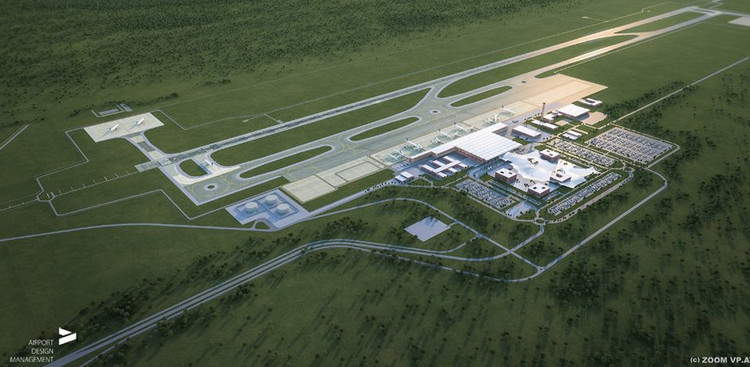
The Bugesera Airport Corridor is fast becoming Rwanda’s most closely watched real estate market, as a $2 billion international airport reshapes land values between Kigali and Bugesera. Here is what is being built, where prices are moving, and what investors should know before buying.
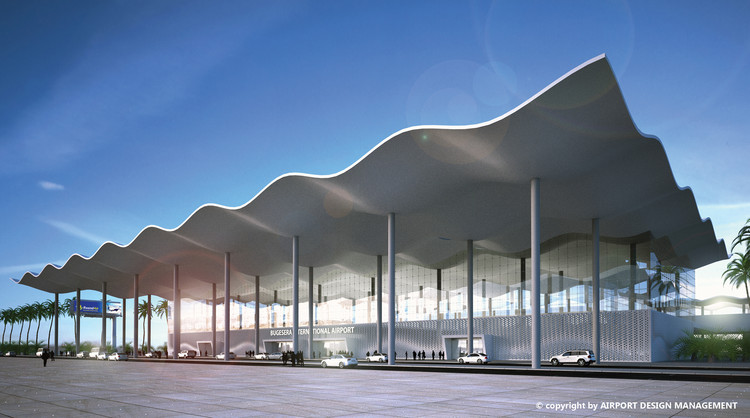
Just 25 kilometres southeast of Kigali, the $2 billion Bugesera International Airport stands as Rwanda’s most ambitious infrastructure bet yet, serving as the powerful anchor for the entire region’s economic growth. Qatar Airways heavily backs the vision, taking a 60% stake in the airport itself and snapping up a 49% chunk of national carrier RwandAir.
After shaking off early redesign delays, the project is picking up real momentum. Rwanda’s 2025/26 budget included RWF699 billion for the airport itself, part of a wider RWF1.216 trillion budget increase, backed by a $200 million AIIB loan to keep construction on schedule.
The rollout breaks down into two distinct phases:
- Phase 1 (Targeting 2028): Built to welcome seven million passengers a year right out of the gate.
- Phase 2 (Targeting 2032): Expands total footprint to handle a massive 14 million annual travellers.
- Cargo Operations: Features a dedicated freight hub capable of processing 150,000 tonnes of cargo every year.
That heavy-duty cargo setup proves Rwanda isn’t just trying to move people; it’s positioning itself to dominate East Africa’s lucrative logistics and cold-chain trade.
Why the Bugesera Airport Corridor Matters for Real Estate
From Agricultural Land to Investment Asset
Bugesera District used to be known primarily for farming, especially the flatter stretches around Nyamata and Gashora. The airport project completely flipped that reality. Land inside and right next to the planned development zones is being revalued from simple farmland into prime commercial and mixed-use real estate. Rwanda went through this exact same shift around Kigali’s outer suburbs a decade ago, but this time it is happening much faster because the anchor project has a firm, government-backed deadline.
This value spike is not happening evenly everywhere. Parcels with paved road access, proximity to commercial zones, or clear legal title are gaining value much faster than raw farmland further out. Anyone researching Bugesera real estate needs to factor in these differences instead of assuming all land will appreciate equally.
The “Airport City” Master Plan
The government’s vision for the area extends far beyond just terminal buildings. Airport City Rwanda is designed as a full-scale aerotropolis spanning over 2,000 hectares across the Rilima, Juru, Nyamata, and Gashora sectors. It even got its own dedicated CEO in 2026 to manage development separately from daily aviation operations.
The master plan’s commercial side features cold storage warehousing, cargo terminals, container yards, and logistics hubs built to ship fresh produce, flowers, and dairy overseas fast. Right next door sits the 335-hectare Bugesera Special Economic Zone focused on manufacturing and processing. The plans also carve out space for aircraft maintenance, business parks, hotels, convention centers, retail hubs, a medical city, and housing designed specifically for local workers rather than Kigali commuters.
Hotspot Zones Along the Bugesera Airport Corridor”
Bugesera District: Nyamata, Rilima, Ngeruka, Gashora
Property values across Bugesera are shifting, but not at the same speed. Nyamata, the district’s commercial core, is seeing the fastest price hikes thanks to its existing setup and front-row seat to the Airport City footprint. Rilima and Gashora sit directly inside the target zone, meaning the master plan will dictate how land is used there. Ngeruka lies a bit further out, but it is catching steady spillover demand from buyers who are priced out of Nyamata and looking for larger plots at a lower entry cost.
Plots on the market right now cover everything from small residential lots for incoming airport workers to massive tracts set aside for future warehouses and hotels. Buyers need to treat these as completely separate investment plays with unique risk profiles.
The Kigali Access Route: Kanombe, Kicukiro, Masaka
The Bugesera Airport Corridor’s impact stretches far beyond the district boundary. It cuts right back through Kicukiro’s Sonatubes area, past Kanombe (home to Kigali’s current airport), and into Masaka, where DP World operates the Kigali Logistics Platform dry port.
Major road upgrades are reshaping this route specifically to move heavy airport cargo and travel traffic. The World Bank-backed KLP Connectivity project is overhauling nearly 70 kilometers of road connecting Masaka straight to the Bugesera Industrial Park, cementing Masaka’s status as a serious logistics hub. For investors, that opens up two clear strategies: high-value real estate inside Bugesera for housing, retail, and hotels, or industrial parcels along the Kanombe-Kicukiro-Masaka stretch built for supply chains and freight.
What’s Driving Land Value Appreciation Along the Bugesera Airport Corridor?
Three factors are compounding to push land values up along the corridor faster than in most of Rwanda’s other secondary markets.
The first is road connectivity. The Sonatubes-Gahanga-Akagera bridge road, a four-lane expressway linking Kicukiro to the Nyabarongo river crossing, has been upgraded specifically to handle airport-bound traffic, while a separate link continues on to Bugesera itself. Better roads shorten commute times from Kigali, which is what converts distant land into viable residential and commercial sites in the first place.
The second is the Kigali Logistics Platform Connectivity Development Project (KLPConnect), a World Bank-backed scheme rehabilitating 69.45km of road to link the Masaka inland dry port to the Bugesera Industrial Park. This is directly relevant to anyone holding industrial or warehousing land, since it formalises Masaka’s role as a logistics gateway.
The third is demographic. Rwanda’s Vision 2050 targets 52% urbanization by 2035 and 70% by 2050, a pace that has consistently outstripped formal housing delivery, urban population growth has run at roughly 5-6% annually in recent years. Bugesera’s proximity to Kigali positions it to absorb a share of that overflow, particularly once airport-linked jobs start drawing workers who need housing close to the district rather than a long commute from the capital.
Tax and Ownership Considerations for Bugesera Investors
If you are eyeing land in Bugesera, Rwanda’s updated property taxes mean you will want to run the numbers before making an offer.
- Capital Gains Tax Doubled: As of January 1, 2026, the tax on property sale gains jumped from 5% to 10% (following a May 2025 Gazette notice). Your eventual exit strategy on high-growth land will cost twice as much in tax as it would have last year.
- Holding Taxes Dropped: The ongoing cost to hold land actually got cheaper. Annual land tax was slashed from up to RWF 300 per square meter down to RWF 0–80.
- Building Taxes Shifted: Commercial buildings now face a lower 0.3% rate on combined land and property value (down from 0.5%), while owning a second residential property triggers a 0.5% rate.
- Foreign Ownership Limits Apply: Foreign buyers are typically limited to 49-year leaseholds (though terms can extend up to 99 years depending on the specific land category, master plan, or major investment approvals from the Rwanda Development Board.) Freehold ownership is reserved for Rwandan citizens; foreigners access land primarily through emphyteutic leases, with full freehold only possible by presidential ordinance in cases of exceptional strategic national interest.
Risks and Realistic Timelines
The airport’s completion date has moved repeatedly since construction began in 2017, with past targets of 2019, 2025 and 2026 all missed. The current “firm commitment” is 2028, and it’s not a guarantee given the track record.
Fiscal exposure compounds this. The IMF warns that financing Rwanda’s roughly 40% stake, an estimated $800 million via external borrowing, will push public debt to 86.3% of GDP in 2026. Both Fitch and Moody’s currently hold a stable outlook on Rwanda, but Fitch projects government debt could still climb to around 79% of GDP by 2027, driven partly by airport-related financing. None of this threatens the airport outright, but government-funded roads and utilities could see their own delays if pressure tightens.
Should You Invest in the Bugesera Corridor Now?
Three things will decide whether a land deal on the Bugesera Airport Corridor pays off: a genuine 5 to 10-year holding horizon, a verified title on that exact plot, and a clear-eyed read on the 10% capital gains exposure before any money changes hands.
Before locking in a parcel in Bugesera, Nyamata, or along the Masaka logistics stretch, get a local property advisor to confirm title and zoning status.